


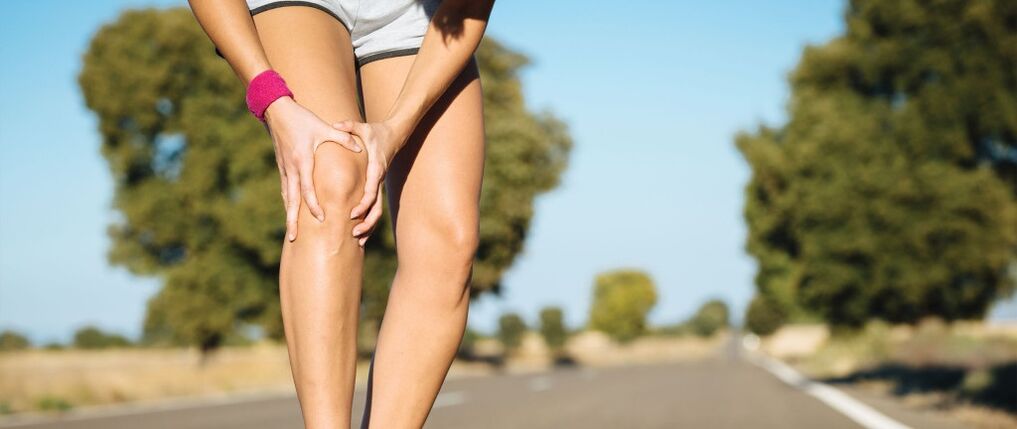
Knee pain is one of the most common symptoms with which patients consult orthopedic and other specialists.Many people completely ignore the appearance of unpleasant sensations, considering them age-related and almost natural.But there are many reasons for pain in the knee joint, because it has a complex structure and is affected by a number of external and internal harmful factors.Some diseases are serious and require urgent treatment.
Who is more likely to injure their knee joints?
The knees are formed by many bones connected by muscles, ligaments and tendons.There are also 5 synovial bursae - cavities surrounded by membranes designed to protect the joint.Between the joints of the bones there are inter-articular cartilages - menisci, which help the knee to move freely.Disruption of even one area of the knee joint leads to the appearance of unpleasant symptoms.
Pain in the knee joint occurs especially often in people with flat feet.This is a pathology of the foot that disrupts the shock-absorbing abilities of the limbs.With age, increased loads on the joints cause their destruction and the development of inflammatory phenomena - pain syndrome appears.Various types of foot and tibia deformities have similar consequences.
There are several factors under the influence of which knee pain occurs more often:
- Excess weight;
- Passive lifestyle?
- High sports loads.
- Diabetes mellitus?
- Vascular diseases?
- Old age;
- Knee surgeries and injuries.
- Work with an increased load on the legs.
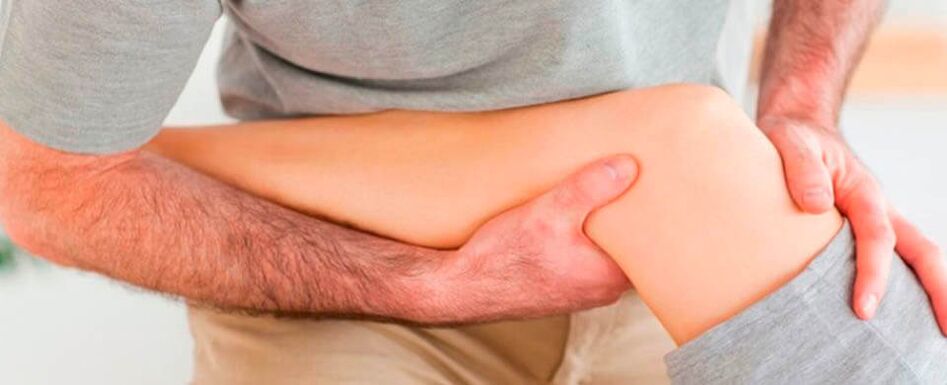
The causes and treatment of knee pain vary greatly, as does the severity of the sensation.If your knee hurts a lot, the cause may be an injury or an advanced stage of osteoarthritis, a severe inflammatory process.Sometimes the symptom becomes permanent, appears even at rest, accompanied by swelling, redness of the skin and tingling.All these signs should warn a person and force him to visit a doctor.
Pain due to bruised knee
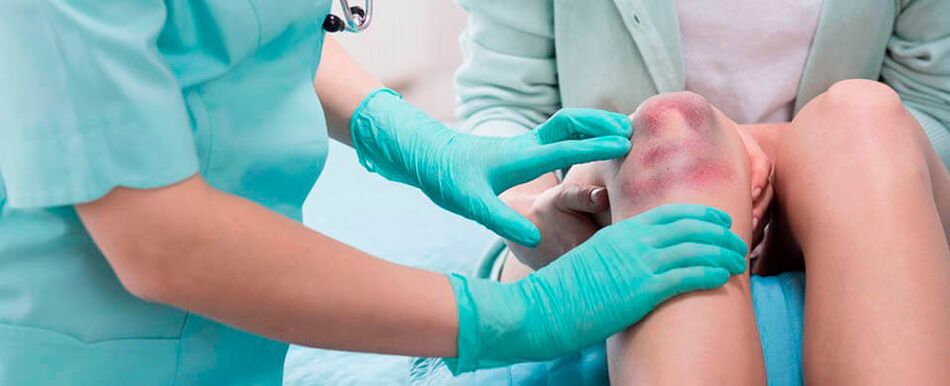
Among the traumatic causes of joint dysfunction, bruises are the most common.Why does my knee hurt if only a small bruise preceded the symptoms?Even a mild injury is accompanied by bleeding in the soft peri-articular tissues and their swelling.As a result, the nerve roots suffer and pain occurs.
In more severe cases, knee pain intensifies when the leg is bent and extended, and the person stops moving due to sharp sensations in the joint.On palpation, you can notice swelling of the leg.it is warm to the touch.How to deal with such an injury?You should contact a traumatologist, take an X-ray, follow all recommendations and provide rest to your leg.
Often the cause of pain in the knee joint after a common bruise is traumatic hemarthrosis.This is an effusion of blood into the joint cavity, causing edema and swelling of the synovial membranes.As a result, the joint fills with blood and inflammation begins.Without proper treatment, an injury can lead to the development of chronic arthropathy even at a young age.
Other types of knee injuries
If your leg hurts in the knee and an injury has contributed to these sensations, the reasons may lie in various damage to the components of the joint.Here are the highlights:
- Meniscopathy.It represents a flattening or tear of the meniscus.Injuries are particularly common in professional athletes, people involved in extreme sports, as well as household injuries.A person feels that the knee is intensely painful, the nature of the sensations is piercing, like a dagger, the joint loses mobility for some time.
- Link damage.A tear (sprain) of the ligaments occurs when the leg is twisted, after a jump, or when the limb is extended in an unnatural position.A sharp pain appears, the leg swells, the position of the joint changes, it becomes loose.
- Cruciate ligament rupture.Since these ligaments are inside the joint, the injury often results in bleeding into the knee socket.Only one puncture will help draw blood and make an accurate diagnosis.
Pain in the knee joint sometimes accompanies chronic dislocations of the patella.Without treatment of an acute lesion, in a number of patients the dislocation becomes chronic and causes regular recurrences.In children, this pathology causes an X-shaped curvature of the foot and leads to a serious impairment of its function.Sometimes the pathology affects the knees on both legs.
Inflammatory diseases of the knees
Often, standard treatment for knee pain is ineffective.In this case, the joint itself may not be affected, but the surrounding soft tissue.Thus, tendinitis or inflammation of the tendon can be caused by increased loads on the limb, past injuries to the leg, allergies, drug reactions, etc.With this disease, the knee joint hurts, as a rule, during the day or at night.the pain subsides at night.In the acute stage, joint mobility is severely limited, the syndrome is persistent and cannot be treated with ointments and creams.Sharp sensations are also observed when palpating the lateral part of the knee.
If your knees hurt regularly, the symptom worsens after hypothermia, the cause may be arthritis - inflammation of the synovial membranes.An inflammatory exudate appears inside the joint, which causes sensations of bursting and pain.The causes of pathology vary:
- Autoimmune diseases?
- Metabolic diseases?
- Traumas of the past.
- Arthritis.
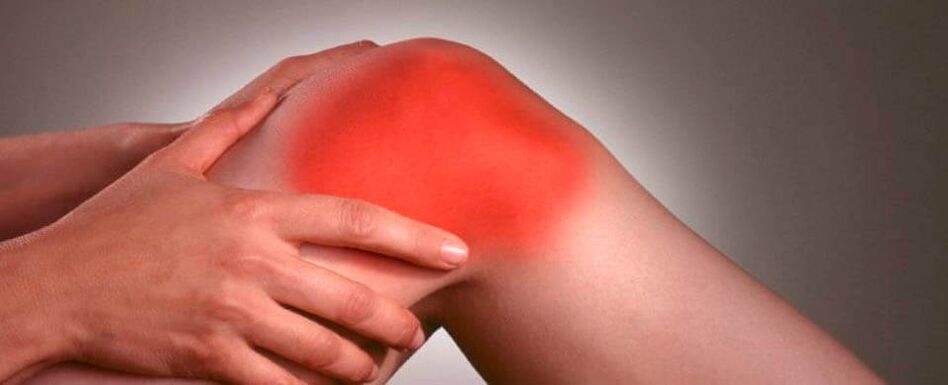
Another "popular" disease that causes knee pain is bursitis.It occurs when the bursa (joint capsule) becomes inflamed.In addition to pain, redness, swelling and increased sensitivity of the kneecap area are observed.If you do not clarify how to treat folliculitis in time, it almost always becomes chronic.
Neoplasms of the knee joint area
Malignant tumors of this location are rare.the pain syndrome is characteristic of them only in the very late stage.More often, pain in the knee joint is characteristic of benign formations:
- Baker cyst.This tumor appears below the knee, on its back surface.In appearance, the skin over the cyst is normal, not inflamed.when bent, there may be no swelling at all.In an upright position, a well-defined, soft, elastic formation appears at the site of the cyst.Occurs after unilateral knee injury or cartilage damage.Very often the cyst accompanies chronic arthritis, joints, rheumatoid arthritis.Large cysts cause not only knee pain, but also severe limitation of limb mobility.Due to the compression of blood vessels and nerves, other symptoms include cold skin, pallor, goose bumps and numbness.
- Meniscal cyst.It occurs in the outer or inner meniscus when a cavity with fluid is located inside the cartilage.In this case, the knees hurt after heavy loads or at the end of the day.Large cysts can be noticed in the lateral part of the joint, small ones are visible only with ultrasound or X-ray.
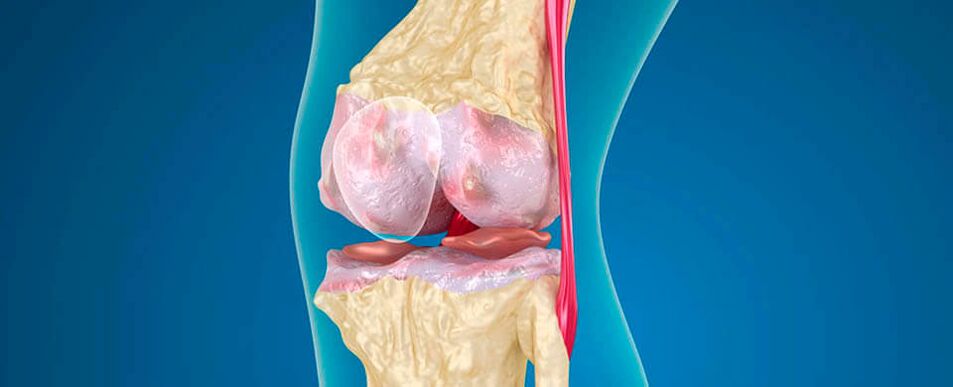
A rare pathology is Hoffa's disease - transformation of the adipose tissue of the joint, which becomes fibrous and causes joint dysfunction.In the context of this pathology, arthropathy often develops, which causes pain in the knee joint.Causes: hormonal imbalances, menopause in women.
Infectious pathologies of the joints
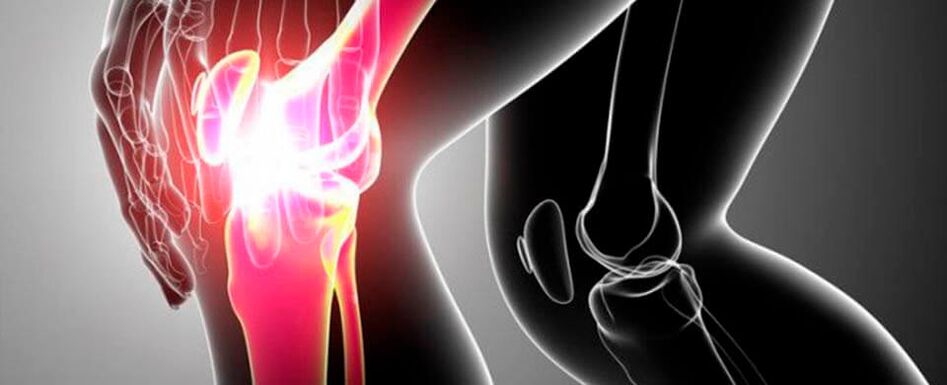
In the context of infection, the knee joint hurts strongly, strongly, rest does not relieve the condition.Even genitourinary and intestinal infections can cause complications in the musculoskeletal system, resulting in reactive arthritis.Bacteria (salmonella, chlamydia, gonococci and others) penetrate the cavity of the bone joint with the bloodstream, settle in the tissues and cause inflammation.Tendons usually become inflamed as well, causing the knee to swell and feel warm to the touch.
Tuberculosis is a serious disease.Mycobacterium tuberculosis multiplies in bone tissue, causing bone melting and necrosis of cartilage and soft tissue.Without urgent treatment, the knee joints ache and collapse, and the process covers larger and larger areas.As a result, fistulas appear - cavities with pus, which can spill out and cause damage to the whole body.
An acute, urgent disease is osteomyelitis of the bones.What to do if your knees hurt and the process is accompanied by weakness, muscle aches and fever up to 40 degrees?If the pain in the knee is dull, bursting, and the tissues themselves are swollen, red and blue, you should urgently call an ambulance and go for emergency surgery.Otherwise, you may lose your leg or die.
Knee pain – causes of a degenerative nature
After the age of 50, a huge number of people have knee pain.Necessary conditions are the aging of the body, the deterioration of the joint mechanism and the development of the most common pathology - osteoarthritis (joint joint).It leads to thinning and destruction of the cartilage with a change in the shape of the bone heads.Most often, at the initial stage of the pathology, knee pain on one side.after a few years, the lesion becomes bilateral.The stiffness in my leg bothers me in the morning, but it subsides quickly.Heightened sensations are possible after physical work, vigorous sports or a lot of walking.
In advanced stages, synovial tissues break down and osteophytes grow on the sides of the joint space.These are spines made of bone tissue, which in severe cases break and cause unbearable pain.There are many other degenerative pathologies, the symptoms of which will be similar to gonarthrosis:
- Osteochondropathy.It affects the articular surface of the bone, associated with injury and sports.It can develop in teenagers for no apparent reason.
- Arthritis.It can be rheumatoid, psoriatic, gouty and cause chronic inflammation and destruction of the joints.
- Granulation.The etiology is unclear.The disease causes the appearance of nodules in the synovial membranes, which limit the movement of the knee and cause pain.
Menopausal women often have knee pain due to osteoporosis – thinning of the bones, increasing their fragility.The disease is accompanied by leg cramps, pain in the spine and periodic fractures.
Other causes of knee pain
When your knees hurt, the cause of the sensation may also lie in damage to the peripheral nervous system.Thus, neuropathy of the sciatic nerve against the background of damage to the lumbar vertebrae leads to a number of symptoms.A person's knees hurt, the hip area hurts, the joints of the limbs weaken, and the sensitivity of the skin is reduced.Leg reflexes also change.
Sometimes the entire knee joint hurts due to vascular disorders.Only in adolescence you should not worry too much - due to the rapid growth of the body, the vessels do not have time to supply the bones with blood.With age, the condition of the joint normalizes - usually by the age of 18-20 the pain stops completely.
In old age, with atherosclerosis, the knees also often hurt, what to do in this case?Without normalization of fat metabolism, plaque will continue to deposit within the arteries.The vessels become blocked and stop supplying the joint completely.Arthropathy develops in this and the pain becomes chronic.Unpleasant sensations in the knee area can also be caused by varicose veins, thrombophlebitis and vascular thrombosis.
How to make a diagnosis?
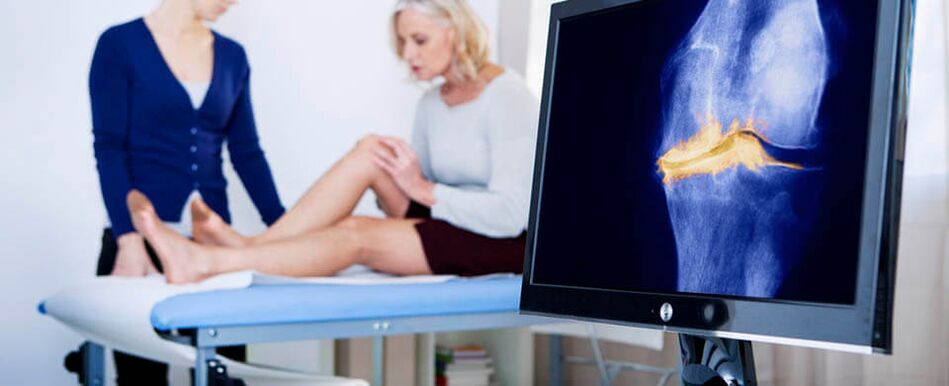
People have knee pain quite often.The way to treat the condition can only be determined after an examination.Both acute and annoying pain in the knee is characteristic of many pathologies, some of them are very dangerous.For a diagnosis, you should contact a surgeon, orthopedist, neurologist, rheumatologist or traumatologist.He will conduct an investigation, find out the exact symptoms of the disease and identify the accompanying signs.Also, at the initial appointment, the doctor will perform a series of tests and physical examinations to clarify the nature of the problem.
What to do when your knees hurt, what organic methods will help identify the causes?It is usually prescribed:
- Ultrasound?
- MRI?
- CT?
- X-ray.
The choice of the exact technique should be left to the doctor.Thus, ultrasound does a good job of reflecting changes in the foot due to joint and meniscal damage.X-rays show perfect bone deformities and the presence of osteophytes.MRI and CT scan provide complete information.they are necessary for complex diseases.In addition, the doctor will prescribe blood tests to rule out inflammation and rheumatism and, if necessary, a joint biopsy will be performed.For osteoporosis, densitometry is required - it will show the patient's bone density.
Treatment of knee pain
If the pathology is traumatic, the treatment is carried out by traumatologists, sometimes it is carried out in a hospital.Light bruising goes away on its own within a few days.to quickly resolve the hematoma, it is recommended to apply absorbable ointments to the knee.If pain occurs, ointments with non-steroidal anti-inflammatory components should be rubbed.
How to cope when the knee hurts due to its inflammatory damage?In the acute stage of bursitis, arthritis, arthritis, the affected leg requires rest.Ice packs can be applied to it for 15 minutes during the first 3 days.Severe pain is relieved by injections of non-steroidal anti-inflammatory drugs and injections of anesthetics directly into the joint.To prevent chronic inflammation in the joint after the pain subsides, physiotherapy and exercise therapy are prescribed.
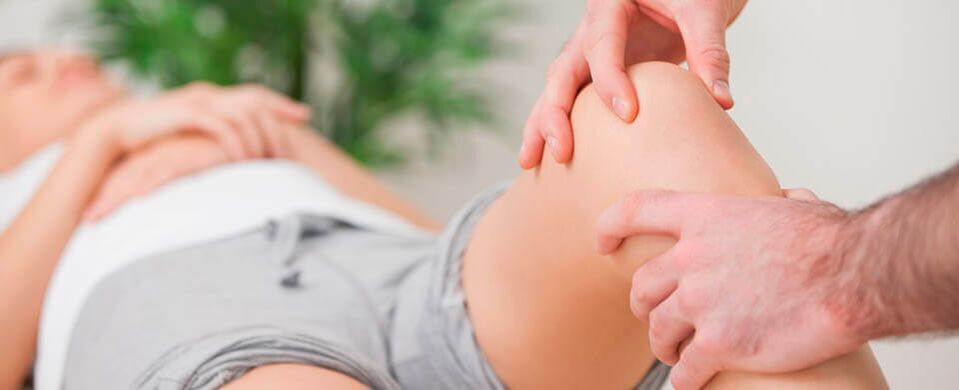
When a person has knee pain due to gonoarthrosis, what should he do in this case?The main drugs for treatment are chondroprotectors and hyaluronic acid injections.These drugs are intended to restore nutrition to the articular cartilage, so it stops deteriorating.Also, the following should be prescribed for knee rehabilitation:
- Vascular drugs?
- Physiotherapy;
- Gymnastics;
- Massage;
- Vitamin complexes.
Infectious diseases of the joints are an indication for the introduction of antibiotics into the joint cavities or taking drugs by mouth.In some cases, it is necessary to perform surgery to remove tissue affected by pus.Advanced forms of joints with osteophyte proliferation are also treated with surgery.Sometimes only replacing a joint with a prosthesis allows a person to maintain the ability to walk normally.